
How Custom Software Development Helps Businesses Grow
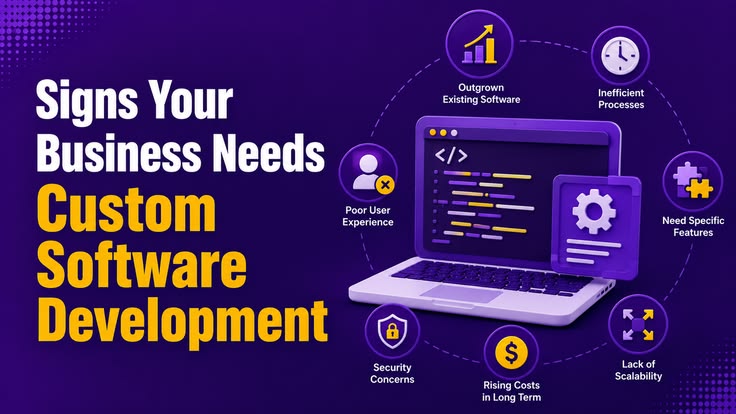
Every business has its own way of working. Ready-made software forces you to adapt to it. Custom software development services do the opposite: they build the software around your workflow. Done well, this can save time, reduce mistakes, and give you a system that grows with you.
What Is Custom Software?
Custom software is designed and built for one organization’s specific needs. It can be a web application, mobile app, desktop system, or a combination, and it can connect with the tools you already use.
6 Ways Custom Software Supports Business Growth
1. It Fits Your Workflow
Instead of working around the limits of a generic tool, your team uses screens and steps that match how your business really operates.
2. It Reduces Manual Work and Errors
Repeated tasks, such as billing, stock updates, and reporting, can be automated, which saves time and lowers the chance of mistakes.
3. It Brings Information Together
When sales, inventory, customers, and finances live in one system, owners see the full picture without chasing notebooks and spreadsheets.
4. It Scales as You Grow
New users, locations, or features can be added in a planned way rather than replacing the whole system.
5. It Gives You Control
You decide the roadmap, permissions, and integrations, instead of waiting on a vendor’s product plans.
6. It Can Become a Competitive Advantage
A smoother customer experience or faster internal process is hard for competitors to copy when it is built around your strengths.
A Real-World Example: Software Built Around a Specific Industry
Take an optical shop. It needs billing, eye test records, frame and lens inventory, customer credit accounts, supplier purchases, and daily cash closing, all connected. A general retail tool rarely covers prescriptions or credit ledgers well. That is why GFT Solutions built OptiCore, a desktop solution designed around how optical shops work. You can read more in our article OptiCore: A Smarter Desktop Solution by GFT Solutions.
Custom vs Ready-Made Software
| Factor | Custom software | Ready-made software |
|---|---|---|
| Fit to your workflow | Built for you | You adapt to it |
| Upfront effort | Higher | Lower |
| Flexibility to grow | High | Limited by the product |
| Ownership and control | Usually yours | Vendor controlled |
If a ready-made tool covers your needs well, use it. If you rely on workarounds or several disconnected tools, custom software is worth exploring.
Enterprise Software Development: When Needs Get Bigger
Larger organizations often need systems that handle many users, departments, integrations, and strict security and reporting requirements. Enterprise software development focuses on reliability, role-based access, performance at scale, and long-term maintainability.
How to Start a Custom Software Project
- Define the problem and the result you want.
- List key users and their daily tasks.
- Prioritize features, starting with the ones that deliver the most value.
- Start small with a first version, then improve it using real feedback.
- Plan for support, including updates and training.
For help choosing a partner, read our guide How to Choose a Custom Software Development Company.
Conclusion
Custom software is not for every business or every problem. But when your processes are unique, your data is scattered, or growth is stretching your current tools, it can turn software from a limitation into an advantage.
Have a workflow that off-the-shelf software cannot handle? Talk to GFT Solutions about a custom solution.
Contact GFT Solutions